Best Notion Template Ideas That Sell in 2026: Clear Use Cases, Better Buyers, and Bundle Paths
Learn the best Notion template ideas that sell in 2026, which buyer problems convert best, and how to choose ideas with real bundle and funnel potential.
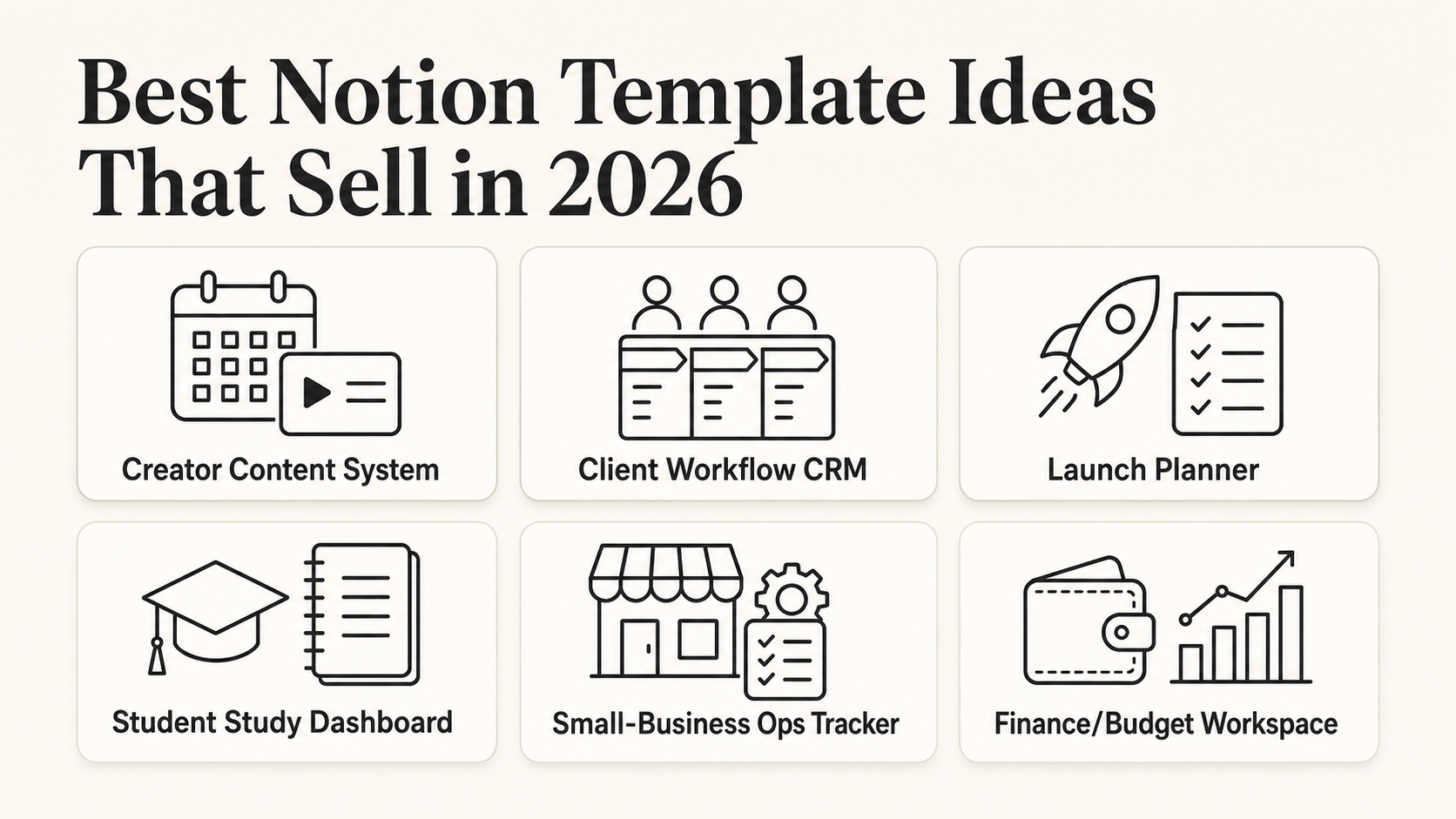
Visual summary: This summary image highlights six Notion template ideas with the clearest mix of buyer intent, repeat demand, and bundle potential in 2026.
The best Notion template ideas in 2026 are not the prettiest dashboards. They are the ones tied to a real workflow, a specific buyer, and a result that feels useful enough to pay for. Good ideas sell because the buyer sees immediate operational value.
Quick Answer
The best Notion template ideas that sell in 2026 are focused systems for creators, freelancers, students, and small operators who want a faster workflow. Good examples include content systems, client CRM setups, launch planners, study dashboards, operations trackers, and finance workspaces. The strongest ideas are narrow enough to explain quickly and flexible enough to support bundles or later follow-up offers.
Key Takeaways
- The best-selling Notion ideas solve one buyer workflow, not every workflow at once.
- Business-use and creator-use templates usually justify better pricing than vague lifestyle dashboards.
- The strongest idea is the one that can later support a bundle, launch path, or email follow-up.
Decision Summary
- Choose this route if: you can identify one buyer, one workflow, and one visible outcome.
- Hold off if: your idea is still an “all-in-one second brain” with no clear user.
- Do next: pick one narrow idea, package it clearly, then test whether it can grow into a bundle or launch path.
What makes a Notion template idea sell
A good idea usually has four traits:
- the buyer already understands the problem
- the workflow is annoying to build from scratch
- the result is easy to show in screenshots
- the template can later connect to a larger product or system
That fourth point matters more than most creators think. If the idea can only become a one-off download, it may still sell, but it is harder to turn into meaningful revenue. If it can become a bundle, onboarding pack, workshop, or creator funnel, the same buyer becomes more valuable.
The best ideas to test now
1. Creator content systems
These help creators plan posts, map campaigns, track assets, and keep publishing workflows organized. This category works when the template is built for a specific creator type instead of a vague content universe.
2. Client workflow CRM templates
Freelancers, consultants, and small agencies all need a clean way to track leads, onboarding, deliverables, and follow-ups. Business-use templates are strong because buyers attach them to revenue, not just productivity aesthetics.
3. Launch planners
Launch checklists, offer calendars, email-sequence trackers, and product rollout dashboards sell because the buyer has a defined moment with real urgency. These are often easier to bridge into funnel or email products later.
4. Student study dashboards
Students still buy templates when the system is simple and outcome-driven: assignment tracking, exam planning, research organization, or semester planning. This idea works best when the template is built around one academic use case instead of a giant lifestyle board.
5. Small-business operations trackers
These include SOP hubs, task systems, meeting trackers, and lightweight internal operations dashboards. The appeal here is time saved and cleaner execution, which supports stronger buyer intent.
6. Finance and budget workspaces
Budget planning, cash-flow trackers, savings systems, and freelance finance workspaces can still work when the template is clear, practical, and not overloaded with unnecessary views.
Ideas that are more crowded than they look
Generic “second brain” dashboards, aesthetic life planners, and ultra-broad productivity kits are still everywhere. They can sell if the creator already has audience trust, but they are weak entry points for a new seller because the buyer sees too many substitutes.
The safer move is to go narrower. A productivity dashboard for everyone is weak. A client workflow system for freelance designers or a launch planner for small creators is stronger.
How to pick the first idea without overbuilding
Start with the idea that is easiest to explain in one line and easiest to preview in three screenshots. Then check:
- whether the buyer already pays for adjacent workflow help
- whether the template could later support a bundle or service add-on
- whether the template naturally connects to email, launch, or operations content
If the answer is yes, you probably have a better idea than a generic dashboard.
The better money move after idea validation
A Notion template can be the first product, but it should not stay the only product forever. If one idea starts selling, the better move is to build a small path around it: a bundle, a setup guide, a launch kit, or an owned follow-up system.
That is why creator systems, client workflows, and launch planners matter so much. They are easier to connect to higher-value next steps than broad personal organization templates.
Recommended Next Step
Do not start with the biggest dashboard you can imagine. Start with the narrowest idea that solves one visible workflow, then build the smallest path that can turn a buyer into a second-step customer.
- Build the first owned product path in one stack: Try Systeme.io free
- Check the baseline before adding extra software: Systeme.io Pricing in 2026
- Use a ready-made setup if you want the fastest launch path: Systeme.io Funnel Templates That Actually Convert
- Compare the creator-focused alternative before scaling: Systeme.io vs Kit for Creator Launches in 2026
- Match the idea with stronger pricing logic here: How to Price Notion Templates in 2026
- Start with the broader market entry here: How to Sell Notion Templates in 2026
Affiliate disclosure: Some recommendations may use affiliate links. If you sign up through them, we may earn a commission at no extra cost to you.
FAQ
What type of Notion template sells best for new creators?
A narrow workflow template usually sells better than a broad dashboard. Buyers convert more easily when the use case is obvious and the result is easy to picture.
Are student Notion templates still worth selling?
Yes, especially when the template is built around a specific academic problem such as exam planning, assignment tracking, or semester organization.
What Notion template ideas are best for upsells later?
Client workflow systems, creator content systems, and launch planners are often strongest because they can grow into bundles, setup help, email sequences, or later business offers.