How to Add Affiliate Offers to a Notion Template Business in 2026
If you already sell or plan to sell Notion templates in 2026, the easiest extra revenue usually comes from adding tightly matched affiliate offers that help the buyer implement, market, or monetize what they just bought.
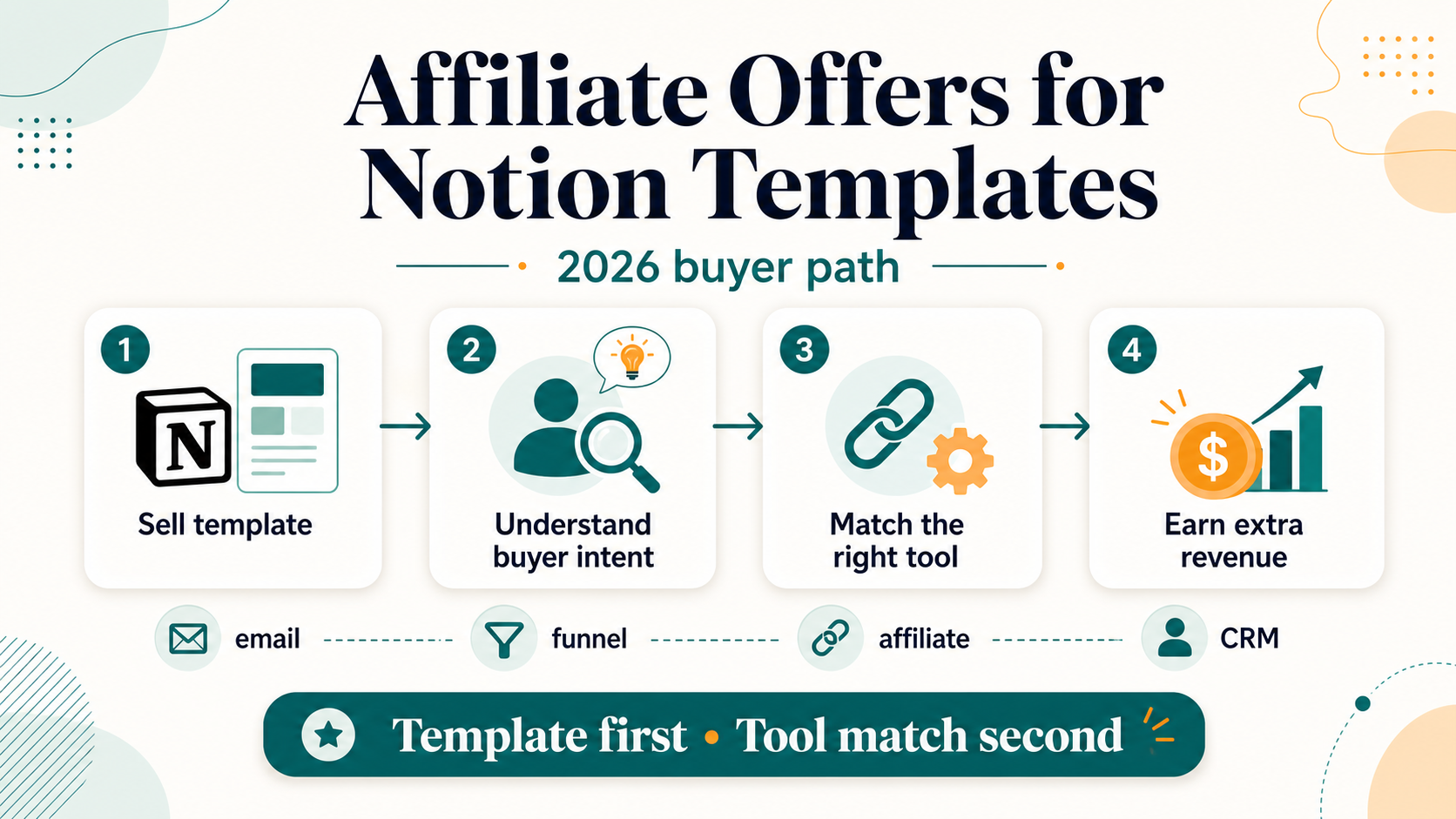
Visual summary: This summary graphic shows the practical recommendation from the article: sell the template first, then introduce matched affiliate tools that help the buyer take the next business step.
See Matching Affiliate Tool Paths →
Most Notion template sellers leave money on the table because they stop at the template sale. In practice, buyers often need more than the file itself. They need tools to collect leads, automate follow-up, sell an offer, or organize the business around the template. That is where affiliate revenue can fit naturally without turning the business into spam.
Quick Answer
The best way to add affiliate offers to a Notion template business in 2026 is to recommend tools that clearly extend the job the template already solves. If the template helps a creator launch a product, the next recommendation might be a funnel or email tool. If the template helps a freelancer organize clients, the next recommendation might be a CRM or automation platform. The rule is simple: the affiliate offer must feel like the next practical step, not a random monetization add-on.
Key Takeaways
- Affiliate revenue works best when the offer directly supports the template buyer's next action.
- The cleanest monetization path is template sale first, implementation tool second.
- Poor affiliate fits reduce trust faster than they increase revenue.
Decision Summary
- Choose affiliate offers that match the buyer's workflow after using the template.
- Place offers where they solve a real implementation bottleneck, not where they simply pay a commission.
- For most template sellers, the best bridge is into email, funnel, or monetization tools with clear next-step value.
Why Notion template sellers should think beyond the first sale
A Notion template business often starts with one useful asset, but buyers usually need more than the file itself. They may still need tools to capture leads, automate follow-up, or sell an offer around the workflow the template organizes.
That gap creates a natural monetization opportunity, but the recommendation has to feel helpful and inevitable, not bolted on just for commission.
What makes an affiliate offer a good fit
- The tool solves the next problem created after using the template.
- The offer matches the template's audience and use case.
- The seller can explain exactly why the buyer would click now, not later.
A good affiliate fit starts with buyer intent. If the template helps a creator launch a product, the next tool might be email or a funnel platform. If it helps manage clients, the next recommendation might be CRM software.
Generic affiliate lists underperform because they are not anchored to a buyer job. Pairing each template with one or two logical implementation tools is easier to trust and easier to click.
Where to place affiliate offers without damaging trust
- Inside the product page, after the template outcome is clear.
- Inside the delivery email, where the buyer is already moving into implementation.
- Inside a setup guide, tutorial, or resource page linked from the template.
The placement matters because trust is fragile early. The buyer has to see the template as the main product and the affiliate offer as the useful next layer.
The best placements are the moments when the buyer naturally asks what to use next, such as the sales page, delivery email, or a short implementation guide.
The strongest bridge for 2026 is into monetization tools
For many Notion template businesses in 2026, the strongest affiliate path is not into another design asset. It is into the tools that help the buyer monetize faster. That often means funnel builders, email platforms, affiliate programs, or simple revenue-stack software that closes the gap between planning and selling.
This is especially true for creators, digital product sellers, and side-hustle operators who need a cleaner route from idea to audience to offer. A launch template can bridge into a funnel-and-email stack, while a monetization template can bridge into curated affiliate and email tools.
What most Notion template sellers should do next
If you are early, pick one template, identify the buyer's next bottleneck, and attach one or two tightly matched tool recommendations. If your templates already sell, review where buyers get stuck after purchase and place the recommendation there.
Recommended Next Step
If this article matches your next move, do not stop at the idea level. Go review the adjacent money pages that make the affiliate path concrete.
- See the broader monetization field: Best SaaS Affiliate Programs for 2026.
- If your template audience needs funnel execution, review the Systeme.io Affiliate Program in 2026.
- If your next question is how to build the revenue layer with email, read How to Build an Affiliate Revenue Stream With Email.
FAQ
Can you add affiliate offers to a Notion template business without looking spammy?
Yes, if the offer clearly helps the buyer take the next step after using the template. The problem starts when the links feel random or commission-first.
What is the best affiliate offer for a Notion template audience?
Usually the best offer is the tool that helps the buyer implement, market, or monetize the system the template organizes. Email, funnel, and monetization tools are often stronger than unrelated software lists.
Should a template seller add affiliate links on the sales page or after purchase?
Both can work, but the best placements are where the buyer naturally asks what to use next. Delivery emails, setup guides, and implementation pages are often especially effective.